What is Roof Flashing and Why Does It Leak?
Ask most homeowners where their roof leak is coming from and they’ll point to a shingle. In reality, the majority of roof leaks originate at the flashings — the metal components installed wherever your roof meets another surface. Understanding what flashings are, where they’re located, and why they fail is essential knowledge for any homeowner.
Our roof flashing services cover all types of flashing installation, repair, and replacement across the GTA.
What is Roof Flashing?
Roof flashing is thin metal — typically aluminum, galvanized steel, or copper — installed at vulnerable transition points on your roof to redirect water away from joints and seams. Without flashing, water would pool at these junctions and work its way into your home.
Flashing is installed at:
- Chimney bases and sides
- Plumbing stacks and exhaust vents
- Skylight perimeters
- Where the roof meets a vertical wall (step flashing)
- Roof valleys where two slopes meet
- Along all roof edges (drip edge)
Why Does Flashing Leak?
Flashings fail for three main reasons:
1. Age and Corrosion
Metal flashings corrode over time — especially in Canada’s freeze-thaw climate. Old flashings crack, separate from their substrate, and lose their waterproof seal. Most flashings last 20–30 years, but the sealants around them deteriorate faster — typically within 10–15 years.
2. Thermal Movement
Repeated expansion and contraction from temperature changes — particularly pronounced in the GTA — pulls flashings away from their sealed positions. This is especially common around chimneys, where the chimney and roof expand and contract independently.
3. Poor Original Installation
Improperly installed flashings — wrong overlap, incorrect material, or inadequate sealant — fail quickly. This is the most common cause of early flashing failure and is often discovered during a re-roofing project.
Chimney Flashing — The #1 Leak Source
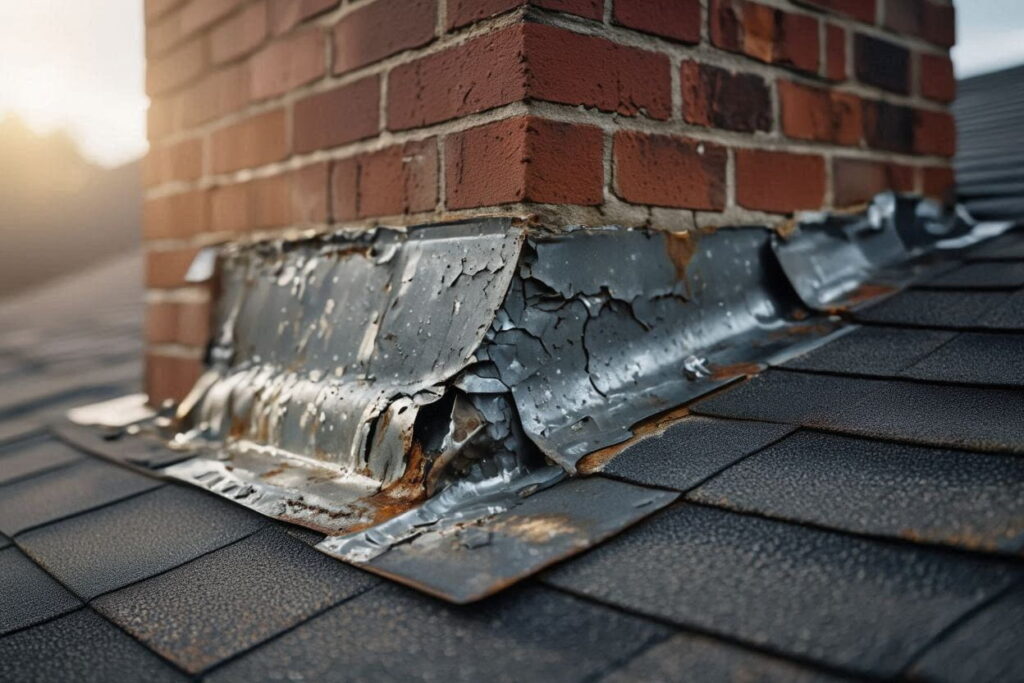
Of all flashing locations, chimney flashing is the most common source of residential roof leaks. A properly flashed chimney uses a two-part system: base flashing (attached to the roof) and counter flashing (embedded into the chimney mortar). When either component fails, water enters directly.
Signs of chimney flashing failure include water stains on ceilings near the chimney, rust streaks on the chimney exterior, and visible gaps at the chimney base from ground level.
How Are Flashing Leaks Diagnosed?
Flashing leaks are notoriously difficult to trace without professional experience. Water enters at one point and travels along roof decking and rafters before dripping down to a ceiling — often several feet from the actual entry point.
Our team uses a combination of attic inspection, systematic roof examination, and controlled water testing to pinpoint the exact source before any repair work begins.
Noticing water stains near your chimney, skylight, or an exterior wall? Book a free inspection with Eclat Home — we find the real source and fix it correctly the first time.