TPO vs EPDM vs Modified Bitumen — Which Flat Roof is Best?
If your home or commercial property has a flat or low-slope roof, you’ve likely encountered three names: TPO, EPDM, and Modified Bitumen. Each is a proven flat roofing system — but they differ significantly in performance, cost, installation method, and longevity.
Choosing the right system for your property is one of the most important roofing decisions you’ll make. Here’s an honest comparison to help you understand your options. Our flat roofing team installs all three systems across the GTA.
TPO — Thermoplastic Polyolefin
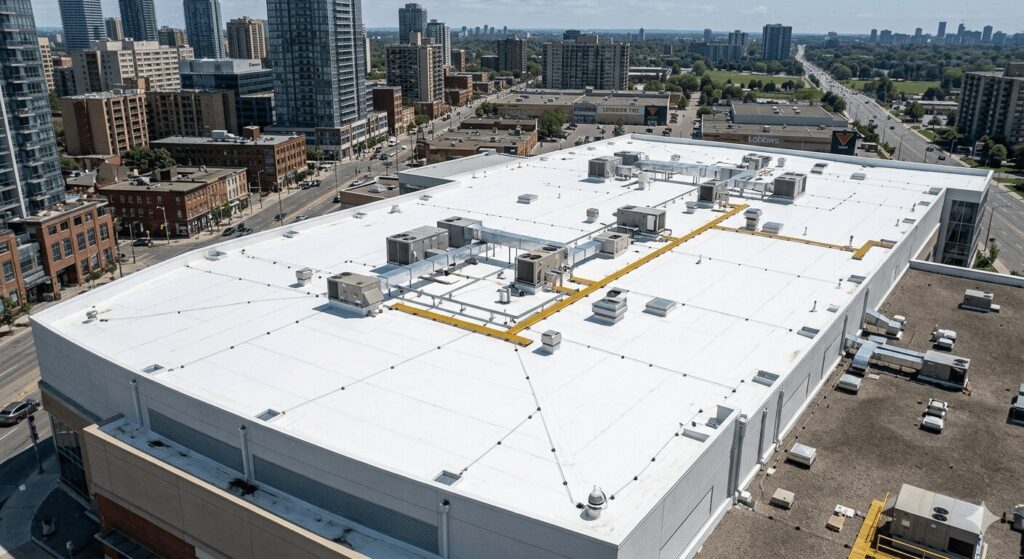
TPO is currently the most popular flat roofing system in Canada — and for good reason. It’s a single-ply white membrane that reflects solar heat, reducing cooling costs in summer. TPO seams are heat-welded, creating a bond stronger than the membrane itself.
Key advantages:
- Energy efficient — reflects up to 70% of solar heat
- Excellent resistance to punctures, tears, and UV
- Welded seams are virtually watertight when properly installed
- Lifespan of 20–30 years
Consideration: TPO quality varies significantly by manufacturer. Professional installation is critical — improper welding creates seam failures.
EPDM — Ethylene Propylene Diene Monomer
EPDM is a synthetic rubber membrane with a 50+ year track record in commercial and residential applications. It’s highly flexible, which makes it particularly effective in Canadian climates where extreme cold can crack more rigid materials.
Key advantages:
- Exceptional flexibility — stays pliable in extreme cold
- Outstanding UV and ozone resistance
- Proven long-term durability — lifespan of 20–25 years
- Cost-effective installation
Consideration: EPDM is typically black — it absorbs heat rather than reflecting it, which can increase cooling costs in warmer months.
Modified Bitumen
Modified bitumen is a multi-layer asphalt-based system applied using a torch — creating a seamless, fully adhered waterproof bond. It has been used in Canadian roofing for decades and remains a reliable, cost-effective solution for flat and low-slope applications.
Key advantages:
- Excellent waterproofing from the torch-applied seamless bond
- Easy to repair — damaged sections can be patched directly
- Granule surface provides additional UV and impact protection
- Lifespan of 15–20 years
Consideration: Torch application requires experienced installers — improper technique creates fire risk and installation defects.
Which System is Right for Your Property?
For most GTA residential and commercial flat roofs, we recommend TPO as the primary choice — offering the best combination of energy efficiency, durability, and long-term value. EPDM is an excellent alternative for cold-climate applications or budget-conscious projects. Modified bitumen remains a solid choice for repairs and properties where compatibility with existing systems is a factor.
The right answer depends on your specific building, drainage situation, and budget. Contact our flat roofing team for a free assessment and honest recommendation.