
Roof Flashing Services
What We Do
Roof Flashing — The Most Overlooked Leak Source
Most roof leaks don’t start in the middle of a shingle — they start at the joints, edges, and penetrations where different surfaces meet. Roof flashing is the metal barrier installed at these vulnerable points to redirect water away and prevent it from seeping into your home.
At Éclat Roofing & Exteriors, we install, repair, and replace all types of roof flashings for residential and commercial properties across the GTA. Whether you’re dealing with a leaking chimney, a failed vent flashing, or deteriorating step flashings on a roof addition — our certified team diagnoses the problem correctly and fixes it to last.
- Chimney Flashing Installation & Repair
- Vent & Pipe Flashing
- Skylight Flashing
- Step & Counter Flashing
- Drip Edge Installation



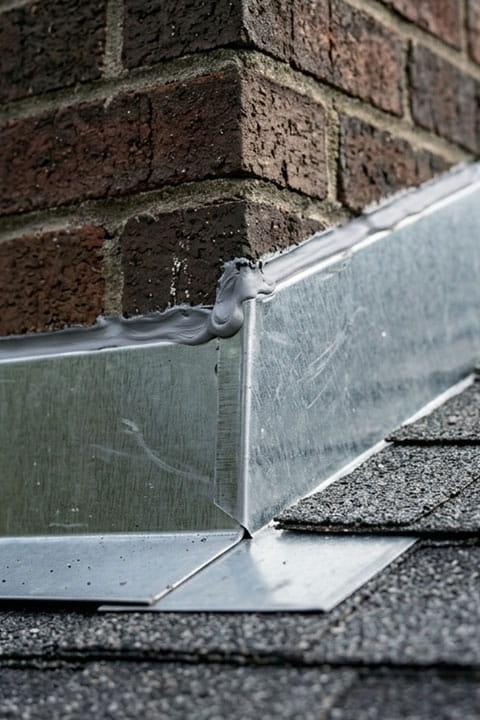
Where Flashings Are Used — And Why Each One Matters
Every area where your roof meets another surface needs flashing. Here are the six most critical flashing locations we install and repair.
Common Problems
Why Roof Flashings Fail
Age & Corrosion
Metal flashings corrode and deteriorate over time — especially in the GTA's freeze-thaw climate. Old flashings crack, separate, and lose their seal without visible warning from ground level.
Thermal Movement
Repeated expansion and contraction from temperature changes pulls flashings loose from their seals and causes the caulking around them to crack — creating water entry points.
Poor Original Installation
Improperly installed flashings are the most common cause of early flashing failure. Incorrect overlap, wrong materials, or inadequate sealing allows water in from the very first rainstorm.
Why Eclat Home
Why Homeowners Choose Éclat Roofing & Exteriors for Flashing Work
Accurate Leak Diagnosis Flashing leaks are notoriously difficult to trace — water often travels far from the entry point. Our team pinpoints the exact source before any work begins.
Quality Materials We use aluminum, galvanized steel, and lead-free materials appropriate to each application — properly sized, overlapped, and sealed for long-term performance.
Comprehensive Inspection When fixing one flashing, we inspect all surrounding flashings on the same visit — identifying any other vulnerable points before they become the next leak.
How It Works
Our Flashing Repair & Installation Process
Inspection & Diagnosis
We conduct a thorough roof inspection — checking all flashings, seals, and joints to pinpoint the exact leak source and identify any other vulnerable areas.
Honest Assessment
We explain exactly what needs to be repaired or replaced, why, and what the risks are of leaving it — giving you a clear, transparent quote before work begins.
Repair or Replacement
Deteriorated or failed flashings are removed and replaced with properly sized, correctly overlapped metal flashings — sealed with professional-grade sealant.
Water Test & Verification
After installation, we verify the repair with a water test to confirm the leak is resolved — and inspect surrounding flashings one final time.
Roof Flashings — Common Questions
Common signs include water stains on ceilings or walls near chimneys, skylights, or dormers; rust streaks on exterior walls; visible gaps or cracks around chimney bases; or water in the attic after rain. A professional inspection is the only way to accurately diagnose the source.
Quality metal flashings typically last 20–30 years. However, the sealants used around flashings deteriorate faster — usually every 10–15 years — and should be inspected and resealed regularly.
Often the flashing itself is intact but the sealant has failed — in which case resealing is sufficient. If the metal is corroded, cracked, or improperly installed, full replacement is the correct solution. We assess and give you an honest recommendation.
Chimney flashings are the most common source of flashing-related leaks, followed by pipe/vent flashings and valley flashings. All are areas where two surfaces meet — creating natural water collection points.
We always inspect all flashings on the same visit. Finding one failed flashing usually means others nearby are at a similar stage of deterioration — catching them early saves a repeat service call.
We use aluminum, galvanized steel, and where appropriate, copper flashings — selected based on the application, surrounding materials, and budget. All installations use professional-grade waterproof sealants.